
Long before the term "functional food" existed, practitioners across ancient civilisations had already identified something that modern nutritional science is only now substantiating: that fermented, acidic preparations made from plants, fruits, and honey were among the most consistently reliable inputs a person could take for ongoing health. Vinegar — in various forms, derived from various starting materials — appears in the medical records of virtually every major civilisation. That is not coincidence. It is the product of thousands of years of systematic empirical observation: successive traditions recorded what worked and refined it over time. This post explores the documented history of medicinal vinegar across major traditional health systems — including Ayurveda, Jamu, and Traditional Chinese Medicine, all of which the World Health Organization identifies as traditional medicine practices still widely used and increasingly integrated into formal health care across South and South-East Asia — and explains how modern science is now building an evidence base that aligns with, and in some cases helps explain, what those traditions understood long ago.
- Vinegar has been used as a functional health preparation for over 5,000 years across multiple distinct civilisations and traditions.
- Oxymel — a honey-and-vinegar tonic — was documented by Hippocrates and referenced in Ayurvedic and Persian medical texts in the context of digestion, respiratory health, and general vitality.
- Traditional fermented tonics in Jamu practice share the same foundational logic as functional vinegar science: fermentation transforms plant matter into more bioavailable, health-supportive compounds — a principle recognised across the traditional medicine systems the World Health Organization notes remain widely used and increasingly integrated into health care across South-East Asia WHO, Integrating Traditional Medicine in Health Care.
- Modern research is now providing mechanistic explanations for many of these traditional uses — particularly acetic acid's effect on post-meal glucose response Johnston et al., Diabetes Care 2004 and gastric emptying Petsiou et al., Nutrition Reviews 2014, along with antioxidants and the gut microbiome.
- ARKA Botanics is built on this lineage: a brand positioned as the Scientific Custodian of Ancestral Wisdom, examining heritage knowledge alongside rigorous modern science.
A 5,000-Year Record
Traces of vinegar's use as a health preparation date back to at least 3000 BCE. Ancient Babylonian records document vinegar as a preservative and medicinal agent. Egyptian urns have been found containing vinegar residues, associated with dietary and medical use. In ancient China, written records from around 1200 BCE refer to fermented grain-based vinegar preparations used within traditional medicinal practice.
What is striking about this record is not just its age, but its geographic breadth. Civilisations that had no contact with each other arrived at strikingly similar conclusions about the value of fermented acidic preparations — because they were all working from the same observable evidence.
The mechanisms were not understood in those eras. What was documented was the outcome: that small, regular amounts of fermented tonics appeared to support digestion and contribute to what many traditions described as overall vitality.
Oxymel: The Original Honey-Vinegar Tonic
One of the most historically documented functional preparations is oxymel — a word derived from the Greek for sharp (oxy) and honey (mel). Hippocrates, writing around 400 BCE, documented oxymel in the context of respiratory complaints, fever management, and digestive support. His formulas were specific: certain ratios of vinegar to honey, combined with other plant preparations, were varied according to the condition being addressed.
Galen, the physician whose writings shaped medicine across the Greek, Roman, and later Islamic worlds, continued to reference oxymel. The Persian polymath Avicenna included oxymel preparations in his Canon of Medicine — one of the most widely read medical texts of the medieval world — documenting its use in the context of gastrointestinal complaints, sore throats, and general health maintenance.
The logic was consistent across these traditions: honey provided nourishment, coating, and antimicrobial properties. Vinegar provided the sharpness that was believed to stimulate the digestive system and cut through excess. Together, they were considered more effective than either ingredient alone.
This is not merely historical curiosity. The combination of honey's prebiotic oligosaccharides Schell et al., Frontiers in Nutrition 2022 and vinegar's acetic acid content — now understood to influence digestion through mechanisms such as delayed gastric emptying Petsiou et al., Nutrition Reviews 2014 — is being studied by modern researchers for precisely the complementary effects these ancient practitioners intuited.
Ayurveda and Fermented Preparations
In the Ayurvedic tradition, fermented preparations occupy a specific and well-documented category. Arishtas and asavas are fermented herbal preparations — made by allowing plant materials and natural sugars to undergo controlled fermentation — that have been part of Ayurvedic practice for well over two thousand years. The fermentation process was understood to transform raw plant compounds into forms that were more readily absorbed and more bioactive.
Fermented sour preparations were also understood in Ayurveda as having a particular relationship with digestion. The concept of agni — roughly translated as digestive fire — describes the body's capacity to process food and extract nutrition from it. Small amounts of sour, fermented preparations taken before meals were traditionally considered to support agni, helping the body prepare for digestion.
This principle maps directly onto the modern practice of taking a small pre-meal vinegar tonic: an ancient insight that is now being examined through the lens of enzyme activity, gastric acid production, and glycaemic response — including research suggesting that vinegar's acetic acid may slow gastric emptying and support a steadier post-meal glucose curve Petsiou et al., Nutrition Reviews 2014.
Jamu and the Fermented Tonic Tradition
Jamu — the traditional herbal medicine system with roots stretching back over a thousand years, and one of the traditional medicine systems the World Health Organization identifies as still widely used and increasingly integrated into national health care across South-East Asia WHO, Integrating Traditional Medicine in Health Care — has its own well-documented tradition of fermented plant preparations. The fermentation of natural ingredients to increase their potency and bioavailability is a core principle of Jamu practice, and fermented ginger, tamarind, and other acidic plant-based preparations have traditionally been used in the context of digestion, immunity, and general wellness.
What Jamu shares with Ayurveda, and indeed with the Greek oxymel tradition, is a foundational understanding that fermentation is not merely preservation — it is transformation. The process of fermentation changes the chemical composition of the starting material, producing compounds that the original ingredients did not contain in significant quantities.
The communities that developed these traditions were making observations about outcomes over generations. The modern scientific task is to understand the mechanisms behind those outcomes — and in many cases, that understanding is now within reach.
What Modern Science Is Now Confirming
The historical record of medicinal vinegar use is extensive. What has been slower to develop — until relatively recently — is the mechanistic explanation for why these preparations appeared to work.
Research published in peer-reviewed journals over the past two decades has begun to provide those explanations:
The Emerging Picture
None of this is to say that every traditional claim has been verified, or that vinegar tonics should be considered medicines. The science is still developing, and individual responses vary. But the emerging picture is one of substantial alignment between what traditional practitioners observed and what modern researchers are measuring.
For more on the specific health benefits associated with functional vinegar tonics, see our complete guide, What Are Medicinal Vinegars? A Complete Guide to Functional Vinegar Tonics.
- Acetic acid — the primary active compound in all vinegars — has been shown in several studies to influence post-meal blood glucose response, potentially by slowing gastric emptying and reducing the rate at which sugars are absorbed Petsiou et al., Nutrition Reviews 2014. A widely cited 2004 human trial found that 20 g of vinegar taken with a high-carbohydrate meal improved whole-body insulin sensitivity by roughly 34% in participants with insulin resistance or type 2 diabetes Johnston et al., Diabetes Care 2004.
- Polyphenols present in fruit-based and plant-based vinegars have demonstrated antioxidant activity in laboratory settings, consistent with traditional claims about vinegar tonics supporting immunity and vitality.
- The fermentation process itself produces beneficial microbial metabolites that may support the gut microbiome — the complex community of bacteria now understood to play a central role in immunity, mood, and metabolic health.
- Honey's oligosaccharides have been studied as potential prebiotics, selectively feeding beneficial bacterial strains in the large intestine Sanz et al., Journal of Agricultural and Food Chemistry 2005, with more recent reviews reinforcing honey's broader role as a prebiotic substrate for gut health Schell et al., Frontiers in Nutrition 2022.
ARKA Botanics: The Scientific Custodian of Ancestral Wisdom
ARKA Botanics was built on a clear philosophical proposition: that the world's traditional health wisdom deserves neither blind acceptance nor reflexive dismissal. It deserves rigorous scrutiny.
"The Scientific Custodian of Ancestral Wisdom" is not a marketing tagline — it is a commitment. Every ARKA formulation begins with an ingredient or preparation that has documented traditional use. It is then evaluated through the lens of modern nutritional science: what compounds does it contain? What mechanisms have been studied? What does the emerging evidence suggest about how it may support health?
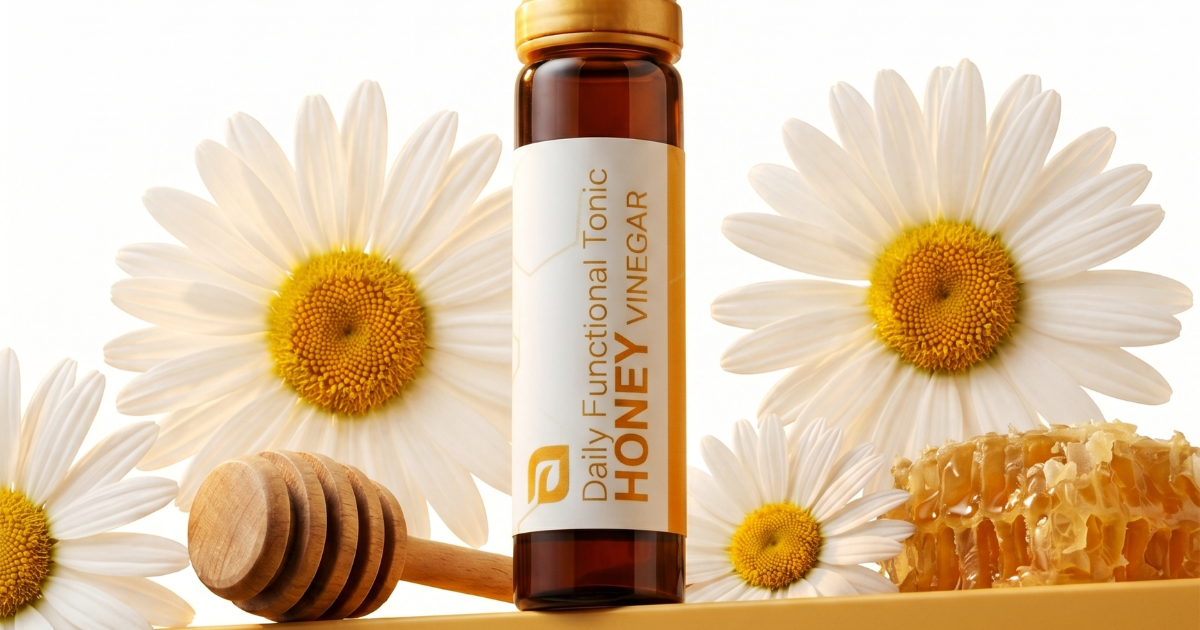
The result is a range of functional food tonics grounded in documented traditional use and validated through transparent, modern scientific evaluation. ARKA's three vinegar tonics — Longan Vinegar for sleep and a calmer mind, Sea Buckthorn Vinegar for everyday immunity, and Honey Vinegar for digestion and gut wellness — each trace their formulation logic back through both tradition and science.
This is what Ancient Roots. Absolute Proof. means in practice: not mysticism, not marketing, but a disciplined, evidence-based bridge between traditional knowledge and modern science.
For a deeper look at the health benefits associated with daily vinegar tonics, read The Health Benefits of Daily Vinegar Tonics (and How to Take Them Safely).
Frequently Asked Questions
What is the history of medicinal vinegar?
Medicinal vinegar has a documented history spanning at least 5,000 years, with records from ancient Babylon, Egypt, Greece, Persia, China, and the Ayurvedic and Jamu traditions. Different civilisations arrived independently at the use of fermented acidic preparations for digestive support, immunity, and general vitality — a convergence that modern science is now helping to explain mechanistically.
What is oxymel, and what was it used for?
Oxymel is a preparation of honey and vinegar with roots in ancient Greek medicine. Hippocrates documented its use in the context of respiratory complaints and digestive support around 400 BCE. Versions of oxymel appear across Persian, Ayurvedic, and herbal medicine traditions through the medieval period. It is, in essence, the historical precursor to the honey vinegar tonic.
Did Ayurveda use vinegar as medicine?
Ayurveda did not use vinegar in exactly the way the Western tradition did, but fermented acidic preparations occupy an important place in Ayurvedic practice — part of a broader landscape of traditional medicine that the World Health Organization notes remains widely practiced and increasingly integrated into formal health care across South and South-East Asia WHO, Integrating Traditional Medicine in Health Care. Arishtas and asavas are fermented herbal preparations with a long history of use. Sour, fermented substances were traditionally used to support digestive fire (agni) before meals — a practice that aligns closely with modern functional vinegar tonic use.
Is there scientific evidence for traditional vinegar tonic claims?
Yes — a growing body of peer-reviewed research is now providing mechanistic explanations for many traditional observations. A 2004 human trial found that vinegar taken with a high-carbohydrate meal improved insulin sensitivity in people with insulin resistance or type 2 diabetes Johnston et al., Diabetes Care 2004, and a 2014 mechanistic review describes plausible pathways such as delayed gastric emptying and reduced starch digestion Petsiou et al., Nutrition Reviews 2014. Other studies have examined polyphenols' antioxidant activity in plant-based vinegars and honey's potential as a prebiotic substrate Schell et al., Frontiers in Nutrition 2022. The science is still developing, and vinegar tonics are functional food products rather than medicines, but the alignment between traditional use and emerging evidence is significant.
How is ARKA Botanics different from other vinegar tonic brands?
ARKA Botanics is positioned as the Scientific Custodian of Ancestral Wisdom — a brand that takes traditional formulation knowledge seriously and evaluates it through the lens of modern nutritional science. Every tonic is grounded in both documented traditional use and available scientific evidence, with full transparency about what is known and what is still being studied. ARKA does not make medical claims; it makes an honest case for heritage-rooted, science-grounded functional foods.
Are ARKA's vinegar tonics based on traditional recipes?
ARKA's tonics are inspired by the principles of traditional fermented preparations — including Ayurvedic fermented tonics, Jamu practice, and historical honey-vinegar formulations — but are formulated to modern food safety and quality standards. They are functional food tonics, not traditional medicines, and each formulation reflects both the heritage of its core ingredients and the best available evidence about their functional properties.
References
- 1. World Health Organization (South-East Asia). "Integrating Traditional Medicine in Health Care." 2023. https://www.who.int/southeastasia/news/feature-stories/detail/integrating-traditional-medicine
- 2. Johnston CS, Kim CM, Buller AJ. "Vinegar Improves Insulin Sensitivity to a High-Carbohydrate Meal in Subjects With Insulin Resistance or Type 2 Diabetes." Diabetes Care, 2004;27(1):281-282. https://diabetesjournals.org/care/article/27/1/281/26582/Vinegar-Improves-Insulin-Sensitivity-to-a-High
- 3. Petsiou EI, Mitrou PI, Raptis SA, Dimitriadis GD. "Effect and mechanisms of action of vinegar on glucose metabolism, lipid profile, and body weight." Nutrition Reviews, 2014;72(10):651-661. https://pubmed.ncbi.nlm.nih.gov/25168916/
- 4. Schell KR, et al. "The Potential of Honey as a Prebiotic Food to Re-engineer the Gut Microbiome Toward a Healthy State." Frontiers in Nutrition, 2022;9:957932. https://pubmed.ncbi.nlm.nih.gov/35967810/
- 5. Sanz ML, et al. "In Vitro Investigation into the Potential Prebiotic Activity of Honey Oligosaccharides." Journal of Agricultural and Food Chemistry, 2005;53(8):2914-2921. https://pubs.acs.org/doi/10.1021/jf0500684