
Vinegar has served as a bioactive dietary input for thousands of years. Today, a new generation of functional vinegar tonics translates that historical use into standardized, science-informed formulations. Amid considerable noise in the health category, precision is warranted: what does the evidence actually show, and how should these products be used to derive their full benefit safely? This article covers the genuine studied benefits of daily vinegar tonics, the mechanisms behind them, and the practical safety guidance every new user should read before beginning.
- Daily vinegar tonic consumption has been associated with benefits to digestive health, post-meal glucose management, appetite signals, immune function, and antioxidant activity.
- Acetic acid — the molecule common to all vinegars — is the best-studied driver of these effects, with human trials linking it to steadier post-meal glucose and insulin responses Johnston et al., Diabetes Care 2004.
- Botanical ingredients in functional tonics add a second layer of benefit specific to the source plant — honey's oligosaccharides, for example, may support gut bacteria as a prebiotic Schell et al., Frontiers in Nutrition 2022.
- Vinegar tonics must be diluted before drinking; never take undiluted.
- These are functional food products, not medicines. Benefits are associated, not guaranteed.
- Always consult a healthcare professional before use if you are pregnant, nursing, or taking medication.
What Makes a Vinegar Tonic Functional?
The word "functional" in food science means that a product delivers a health benefit beyond basic nutrition. For vinegar tonics, this functional status comes from two overlapping sources which, together, create a compound bioactive product more precisely targeted than general-purpose vinegar — for a full explanation of the category, see our complete guide to functional vinegar tonics:
- The fermentation-derived organic acids — led by acetic acid — which have demonstrated bioactivity in peer-reviewed research on glucose metabolism, satiety, and lipid profile Petsiou et al., Nutrition Reviews 2014
- The botanical ingredient itself — which brings its own polyphenols, vitamins, enzymes, or traditional-use associations
The Core Benefits: What the Research Supports
1. Digestive Support and Gut Balance
One of the most consistently cited uses for vinegar tonics — across both traditional practice and modern research — is digestive support. Acetic acid may stimulate stomach acid secretion and support the enzymatic breakdown of food when consumed before a meal.
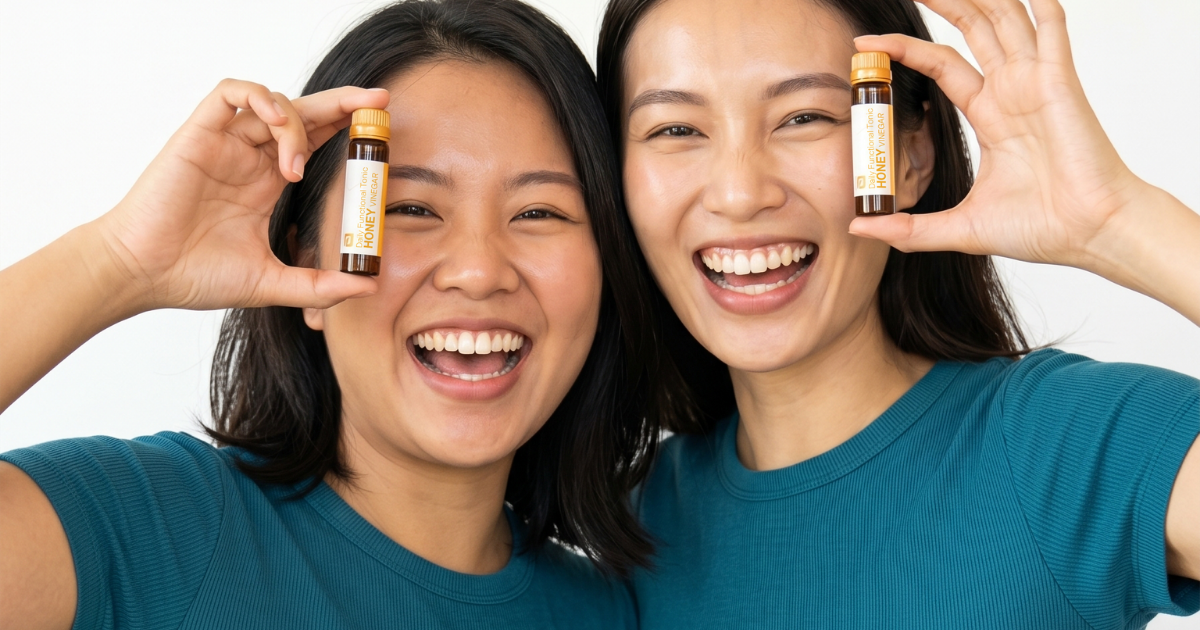
Honey is one of the botanical inputs most associated with this benefit. A 2022 review of the evidence found that honey's natural oligosaccharides and polyphenols may act as prebiotic compounds, potentially supporting a healthier balance of beneficial gut bacteria Schell et al., Frontiers in Nutrition 2022. This is consistent with the historical use of fermented beverages across multiple traditional medicine systems for digestive comfort and regularity — historical precedent that current research is beginning to substantiate mechanistically.
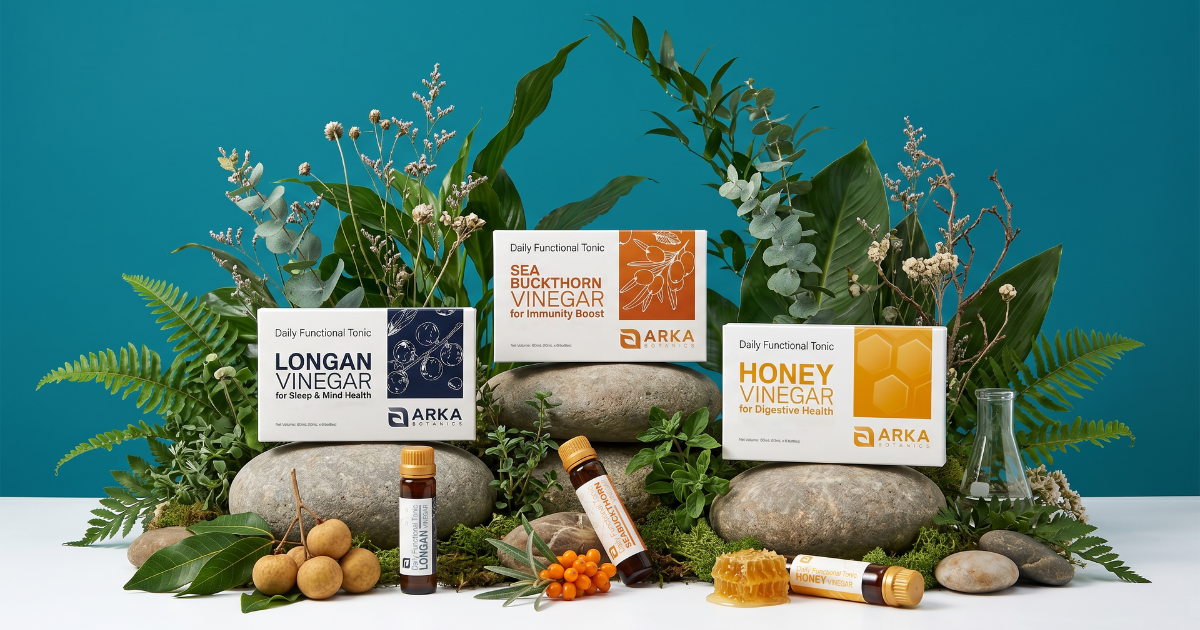
ARKA Botanics Honey Vinegar is formulated to deliver this functional profile. Fermented honey provides organic acids and prebiotic compounds that may support gut-lining comfort and digestive balance when taken before a meal. Read more in Honey Vinegar for Digestion and Gut Health.
2. Post-Meal Glucose Management
Several controlled trials have explored the effect of acetic acid on post-meal blood glucose. The proposed mechanism is that acetic acid may inhibit the activity of alpha-amylase — the enzyme that breaks down dietary starch — slowing glucose entry into the bloodstream after a carbohydrate-rich meal Petsiou et al., Nutrition Reviews 2014.
A foundational 2004 trial found that around 20 g of vinegar taken with a high-carbohydrate meal was associated with roughly a 34% improvement in whole-body insulin sensitivity among people with insulin resistance or type 2 diabetes, alongside a reduced post-meal rise in glucose and insulin Johnston et al., Diabetes Care 2004. A 2015 study similarly found that vinegar consumption was linked to increased insulin-stimulated glucose uptake by forearm muscle in adults with type 2 diabetes Mitrou et al., Journal of Diabetes Research 2015, and a 2017 systematic review and meta-analysis of clinical trials concluded that vinegar consumption can measurably attenuate post-meal glucose and insulin responses across study populations Shishehbor et al., Diabetes Research and Clinical Practice 2017.
A consistent finding across these smaller trials is that consuming diluted vinegar before or during a meal may support a more moderate post-meal glucose response in healthy adults. Larger and longer trials are still needed to establish clinical significance, and none of this research should be interpreted as a treatment for any blood sugar condition.
3. Appetite and Satiety Signals
Acetic acid is a short-chain fatty acid, and researchers have specifically studied its relationship to appetite and food intake. A 2014 human feeding study found that vinegar, consumed as an oral source of short-chain fatty acids, was associated with changes in appetite control and food intake — though the researchers also flagged tolerability limits at higher doses, underscoring why dilution and gradual dosing matter Darzi et al., International Journal of Obesity 2014.
The proposed mechanism overlaps with the glucose-management pathway above: delayed gastric emptying and slower carbohydrate digestion may contribute to a steadier post-meal glucose curve, which in turn may support more even satiety signals Petsiou et al., Nutrition Reviews 2014. This is a genuine area of scientific interest, but individual appetite responses vary considerably, and a diluted vinegar tonic should not be relied upon as a stand-alone weight-management tool.
4. Everyday Immune Resilience
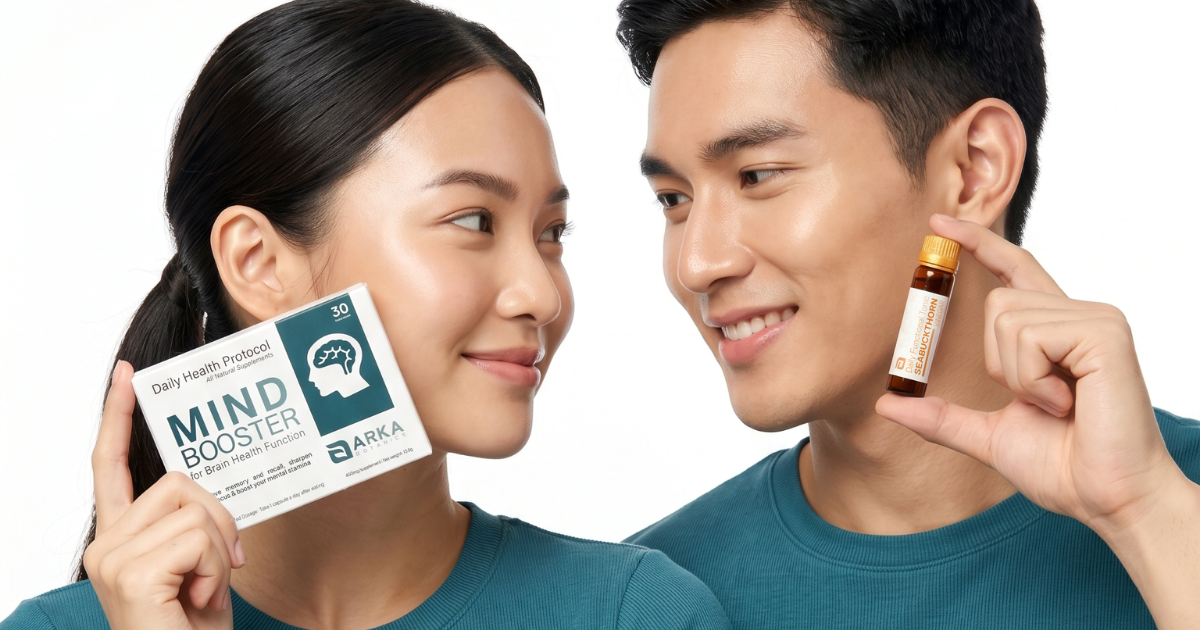
Vinegar tonics with high antioxidant botanical content — particularly those built on nutrient-dense fruits such as sea buckthorn — may support everyday immune function through multiple pathways. Antioxidant compounds are the clearest example: sea buckthorn berries are exceptionally rich in vitamin C and also carry vitamin E, carotenoids, and flavonoids that contribute measurable antioxidant activity Ma et al., Food Chemistry 2020. Antioxidants help neutralise free radicals, reducing oxidative stress that is associated with immune system burden. Some research also suggests that the omega-7 fatty acids and polyphenols in sea buckthorn may support healthy inflammatory responses, and that fermentation itself can increase the bioavailability of some micronutrients, meaning the body may absorb more of the beneficial compounds in a fermented tonic than from the raw ingredient.
ARKA Botanics Sea Buckthorn Vinegar is formulated as a daily immune-fortification tonic, intended for morning use as part of a consistent regimen. Read more in Sea Buckthorn Vinegar: The Antioxidant Tonic for Everyday Immunity.
5. Sleep Quality and Nervous System Calm
The relationship between vinegar tonics and sleep is primarily botanical rather than acetic-acid-driven. Longan fruit has a documented history within traditional medicine systems across East and Southeast Asia, where it has been used for generations as a tonic associated with calmer states, reduced agitation, and more restful sleep — a traditional application that modern research is now beginning to examine mechanistically.
Recent laboratory research has begun to investigate the mechanisms behind these traditional associations. A small human pilot study on longan syrup and sleep quality among people with insomnia reported encouraging early signals Ramathibodi Medical Journal 2023, and separate animal research on longan flower extract identified neuroprotective and antioxidant activity in brain tissue that is mechanistically relevant to sleep-related pathways Prasansuklab et al., 2012. This is early-stage, largely preclinical research with only one small pilot in humans, and direct clinical evidence remains limited — but the direction of inquiry aligns with a long-documented history of traditional use.
ARKA Botanics Longan Vinegar is formulated as an evening tonic for this purpose, intended for consistent nightly use as part of a structured wind-down protocol. Read more in Longan Vinegar: A Tonic for Sleep, Calm, and a Steadier Mind.
6. Antioxidant Activity
Fermented botanical vinegars — particularly those made with polyphenol-rich ingredients such as sea buckthorn — retain measurable antioxidant activity after the fermentation process. Some research suggests fermentation may enhance the bioavailability of certain phenolic compounds, meaning they are more readily absorbed by the body than in the raw ingredient Ma et al., Food Chemistry 2020.
Antioxidant activity is associated with reduced oxidative stress, which plays a role in immune function, cellular health, and ageing — though it would be an overstatement to link antioxidant foods to specific anti-ageing or disease-prevention outcomes.
What Daily Vinegar Tonics Are Not Claimed to Do
Precision matters in scientific communication. Functional vinegar tonics are not medicines, and they do not:
- Treat, cure, or prevent any disease
- Replace medical treatment for diagnosed conditions
- Produce guaranteed results — individual responses to functional foods vary
- Provide therapeutic doses of any vitamin or mineral
How to Take Vinegar Tonics Safely: Practical Guidance
Always Dilute
This is non-negotiable. Vinegar contains acetic acid at concentrations that can irritate tooth enamel, the oesophagus, and the stomach lining if consumed undiluted. The standard approach is to add approximately 10 ml of tonic to a full glass of water (200-250 ml) before drinking.
Time It Purposefully
For digestive and glucose-related effects, before meals — especially your largest meal of the day — is the most commonly studied timing. For Longan Vinegar, the evening is most appropriate for its intended purpose. For Sea Buckthorn Vinegar, morning suits its energising botanical character.
Build Consistency Gradually
If you are new to vinegar tonics, begin with a smaller amount — 5 ml in a full glass of water — for the first one to two weeks. This allows your digestive system to adapt. Increase to the standard 10 ml serving once comfortable.
Protect Your Teeth
Swill with plain water after consuming your tonic. If you find your teeth are sensitive, drink through a straw to minimise direct contact with enamel.
Know When to Pause
You should consult a healthcare professional before using vinegar tonics if you are pregnant or nursing; taking medication for diabetes, blood pressure, or heart conditions (acetic acid may interact with certain medications, particularly those that affect potassium levels); managing a diagnosed gastrointestinal condition; or experiencing persistent digestive discomfort after starting.
This is not an exhaustive list — any doubt is reason enough to seek professional guidance before continuing. For a full safety discussion, see Are Vinegar Tonics Safe? Side Effects and Who Should Be Cautious.
Building the Daily Ritual
The benefits most likely to manifest are those built through consistent daily practice rather than occasional use. Traditional medicine systems recognized this long before modern research: vinegar preparations were formulated for structured, daily intake, not occasional use. The protocol below reflects that historical precedent, supported by current evidence on cumulative dosing.
- Keep your tonic visible on your kitchen counter or beside your morning routine — habit stacking improves adherence
- Pair it with an existing daily anchor (waking, a meal, an evening wind-down)
- Track your response over two to four weeks — not because results are guaranteed, but because a functional food's value should be assessed empirically, through consistent, personal observation
- Be patient — fermented functional foods tend to show their value through accumulation, not acute effect
Frequently Asked Questions
How long does it take to feel the benefits of a vinegar tonic?
There is no universal timeline. Some people notice digestive comfort improvements within one to two weeks of consistent use. Effects on sleep quality or immune resilience, if present, typically become apparent over four to eight weeks. Individual results vary, and consistency is the most important variable.
Can I take vinegar tonics if I have acid reflux?
If you experience frequent acid reflux or gastro-oesophageal reflux, you should consult a healthcare professional before introducing vinegar tonics. For some individuals, the additional acidity may exacerbate symptoms, though others report improvement. Professional guidance is essential.
Is there a best time of day to take a vinegar tonic?
Timing depends on the specific tonic and your health objective. Before meals is the most studied timing for digestive and glucose-related effects Petsiou et al., Nutrition Reviews 2014. Longan Vinegar is best in the evening. Sea Buckthorn Vinegar suits a morning regimen. Honey Vinegar is most effective before your main meal.
Can children take vinegar tonics?
ARKA Botanics vinegar tonics are formulated for adult use (18+). Consult a paediatrician before giving any vinegar product to children.
Are there any foods I should avoid with vinegar tonics?
No foods are specifically contraindicated with functional vinegar tonics. However, if you are on a restricted diet for a health condition, inform your healthcare provider that you are adding a daily vinegar tonic to your routine.
Can I mix vinegar tonics with other drinks?
Water is the recommended dilutant. You can add your tonic to warm water, herbal tea, or diluted fruit juice if preferred. Avoid carbonated drinks, which can intensify the acidic sensation.
References
- 1. Johnston CS, Kim CM, Buller AJ. "Vinegar Improves Insulin Sensitivity to a High-Carbohydrate Meal in Subjects With Insulin Resistance or Type 2 Diabetes." Diabetes Care, 2004;27(1):281-282. https://diabetesjournals.org/care/article/27/1/281/26582/Vinegar-Improves-Insulin-Sensitivity-to-a-High
- 2. Shishehbor F, Mansoori A, Shirani F. "Vinegar consumption can attenuate postprandial glucose and insulin responses; a systematic review and meta-analysis of clinical trials." Diabetes Research and Clinical Practice, 2017;127:1-9. https://www.sciencedirect.com/science/article/abs/pii/S0168822716308518
- 3. Mitrou P, Petsiou E, Papakonstantinou E, et al. "Vinegar Consumption Increases Insulin-Stimulated Glucose Uptake by the Forearm Muscle in Humans with Type 2 Diabetes." Journal of Diabetes Research, 2015;2015:175204. https://onlinelibrary.wiley.com/doi/10.1155/2015/175204
- 4. Petsiou EI, Mitrou PI, Raptis SA, Dimitriadis GD. "Effect and mechanisms of action of vinegar on glucose metabolism, lipid profile, and body weight." Nutrition Reviews, 2014;72(10):651-661. https://pubmed.ncbi.nlm.nih.gov/25168916/
- 5. Darzi J, Frost GS, Montaser R, Yap J, Robertson MD. "Influence of the tolerability of vinegar as an oral source of short-chain fatty acids on appetite control and food intake." International Journal of Obesity, 2014;38(5):675-681. https://www.nature.com/articles/ijo2013157
- 6. Schell KR, et al. "The Potential of Honey as a Prebiotic Food to Re-engineer the Gut Microbiome Toward a Healthy State." Frontiers in Nutrition, 2022;9:957932. https://pubmed.ncbi.nlm.nih.gov/35967810/
- 7. Ma X, et al. "Impact of phenolic compounds and vitamins C and E on antioxidant activity of sea buckthorn (Hippophaë rhamnoides L.) berries and leaves." Food Chemistry, 2020. https://www.sciencedirect.com/science/article/abs/pii/S0308814619319156
- 8. "Effectiveness of Longan Syrup on Improving Sleep Quality Among Insomnia Volunteers." Ramathibodi Medical Journal, 2023. https://he02.tci-thaijo.org/index.php/ramajournal/article/view/261723
- 9. Prasansuklab A, et al. "Neuroprotective Effects of Longan (Dimocarpus longan Lour.) Flower Water Extract on MPP+-Induced Neurotoxicity in Rat Brain." 2012. https://pubmed.ncbi.nlm.nih.gov/22920583/