There are some ingredients that science and tradition point toward from different directions and arrive at the same place. Sea buckthorn (Hippophae rhamnoides L.) is one of them. Used for centuries in traditional medicine systems across Central and East Asia — and in the regions we serve — its berries have long been associated with strength, endurance, and resistance to seasonal illness. Modern phytochemistry helps explain why. Sea buckthorn is an unusually nutrient-dense berry, carrying high concentrations of vitamin C, vitamin E, and polyphenolic compounds that contribute to measurable antioxidant activity. As functional food formats evolve, fermented vinegar has emerged as one of the most practical ways to bring these properties into a daily routine. This article looks at what the research actually says about sea buckthorn's antioxidant and nutrient profile, how that connects — carefully — to immune support, and what ARKA's Sea Buckthorn Vinegar is designed to do, and not do.
- Sea buckthorn is one of the most antioxidant-dense berries studied, with high concentrations of vitamin C, vitamin E, and flavonoid polyphenols Ma et al., Food Chemistry 2020.
- Depending on variety and origin, sea buckthorn berries can contain roughly 400-1500 mg of vitamin C per 100 g — well above citrus fruit Kallio et al., Journal of Agricultural and Food Chemistry.
- Regular antioxidant and nutrient intake from whole-food sources is associated with supporting the body's normal defences against oxidative stress — this is nutrient support, not a claim to prevent or cure illness.
- Sea buckthorn vinegar is an established food-industry format; fruit vinegar drinks made from sea buckthorn are already in commercial use globally.
- ARKA's Sea Buckthorn Vinegar is a functional food tonic, not a medicine, and is not intended to prevent, treat, or cure any illness.
- The recommended daily ritual is 10 ml diluted in water, taken before a meal.
What Is Sea Buckthorn?
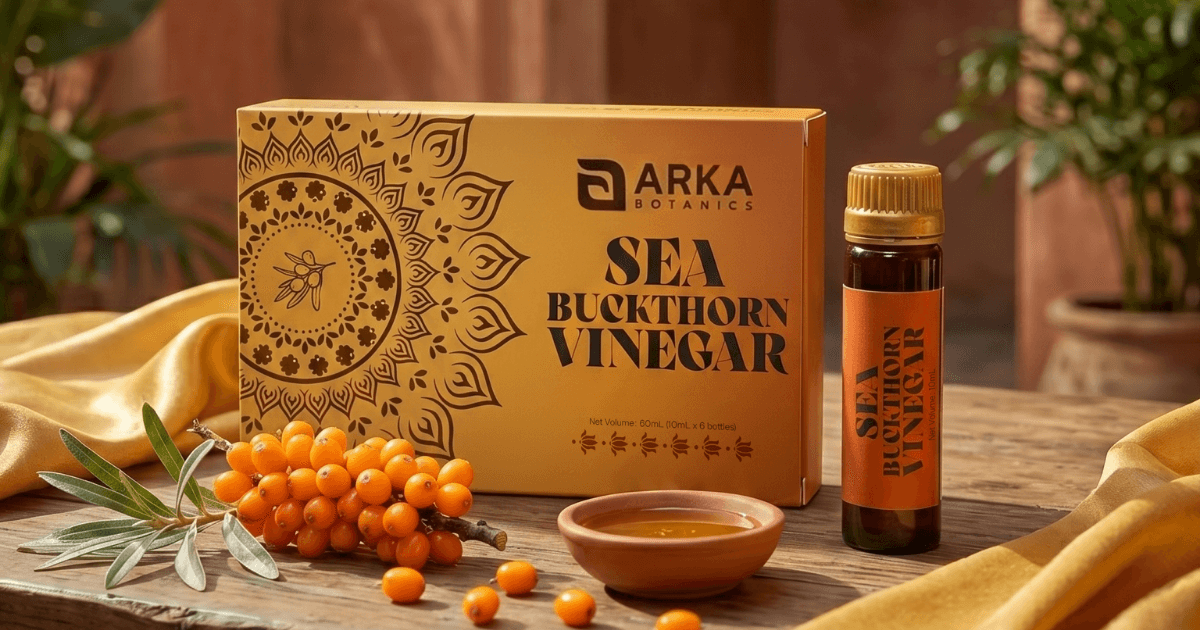
Sea buckthorn is a hardy, thorny shrub whose small orange-yellow berries are unusually dense in nutrients. It thrives in harsh conditions — high altitude, cold temperatures, poor soil — and this environmental stress may be part of what drives its notable phytochemical richness.
The berry is not built around a single active ingredient. It contains a wide range of bioactive compounds, including vitamin C, vitamin E, carotenoids, flavonoids, and phenolic acids, several of which contribute to its measurable antioxidant activity Ma et al., Food Chemistry 2020.
In the communities we serve, sea buckthorn has traditional roots in highland wellness practice, where it was associated with physical stamina, skin resilience, and resistance to seasonal illness — long before modern laboratories confirmed what was in the berry.
The Antioxidant Case for Sea Buckthorn
Three overlapping antioxidant systems make sea buckthorn nutritionally distinctive: a very high vitamin C content, a broad flavonoid and polyphenol profile, and a combination of fat-soluble vitamin E and carotenoids. Together, they are the basis for its reputation as an antioxidant-support ingredient — not a cure, but a well-documented nutrient source.
Vitamin C Concentration
Sea buckthorn's most immediately striking characteristic is its vitamin C content. Depending on variety and growing conditions, sea buckthorn berries can contain between 400 and 1500 mg of vitamin C per 100 g of fresh fruit — substantially higher than citrus fruit Kallio et al., Journal of Agricultural and Food Chemistry. Vitamin C is a well-established antioxidant and a direct contributor to normal immune function, supporting the activity of white blood cells.
Vitamin C also helps protect cells from oxidative damage — the cumulative stress caused by free radicals that is associated with ageing and reduced immune resilience. Vitamin C supplementation research shows mixed results for preventing specific illnesses, but adequate daily intake from food sources is associated with maintaining normal immune function.
Flavonoids and Polyphenols
Beyond vitamin C, sea buckthorn is rich in flavonoids — a class of polyphenolic compounds with antioxidant and anti-inflammatory properties that contribute measurably to the berry's overall antioxidant capacity Ma et al., Food Chemistry 2020. Laboratory and early clinical research into sea buckthorn extracts has explored antioxidant, anti-inflammatory, antimicrobial, and antiviral activity, though researchers in this field consistently note that larger, better-controlled human trials are still needed before firm conclusions can be drawn.
These are meaningful, promising findings — but it's important to hold them at the level of 'some studies suggest' rather than established clinical consensus. Sea buckthorn's polyphenol activity is a genuinely interesting area of ongoing research, not a settled matter.
Vitamin E and Carotenoids
Sea buckthorn also provides meaningful amounts of vitamin E — including tocopherols and tocotrienols — a fat-soluble antioxidant, along with carotenoids such as beta-carotene, the precursor to vitamin A Kallio et al., Journal of Agricultural and Food Chemistry. Both nutrients have recognised roles in maintaining normal immune function and protecting cell membranes from oxidative damage. The combination of fat-soluble and water-soluble antioxidants in a single food source is part of what makes sea buckthorn nutritionally distinctive Ma et al., Food Chemistry 2020.
Sea Buckthorn and Immune Support: What the Research Says
Immune function is not a single mechanism — it is a network of cellular activity, inflammation response, and chemical signalling that runs continuously. Supporting that network through diet means providing raw materials (vitamins, minerals, antioxidants) that immune cells use, while reducing the background noise of oxidative stress and chronic low-grade inflammation that can impair how well that network performs.
This is why we frame sea buckthorn's role carefully: it is antioxidant and nutrient support for the everyday conditions immune function depends on — not an immune "boost," a cure, or a substitute for medical care.
A 2025 review in Frontiers in Pharmacology examined sea buckthorn's bioactive metabolites and their relevance to gastrointestinal health, noting that sea buckthorn polyphenols interact with gut microbiota in ways that may be relevant to digestive and immune-related pathways Sea buckthorn bioactive metabolites, Frontiers in Pharmacology 2025. This connection matters because a significant proportion of the body's immune cells sit in gut-associated lymphoid tissue, and the health of the gut microbiome influences how well those cells function.
Fermented vinegar tonics contribute their own studied mechanism here: acetic acid has been linked in mechanistic research to effects on digestion and gut microbial balance, which is relevant background support for the same gut-immune connection Petsiou et al., Nutrition Reviews 2014. Ingredients that support gut health may, through this pathway, also support general immune readiness — though this remains an area of active research rather than a settled clinical finding.
Why Sea Buckthorn Vinegar?
Sea buckthorn fruit vinegar is already an established commercial food product. Sea buckthorn appears in fruit wine, fruit vinegar drinks, juice, and other fermented formats across the functional food industry — this is not an experimental application, but a recognised use of the ingredient.
Fermentation adds its own layer of value. During vinegar fermentation, the fruit base undergoes microbial transformation: sugars become acetic acid, and the polyphenol profile evolves. Some research on fermented foods suggests fermentation can improve polyphenol bioavailability, meaning the body may be better able to absorb and use certain compounds from a fermented source than from raw fruit — though the extent varies by compound and process, and this remains an emerging area of food science rather than a guaranteed outcome.
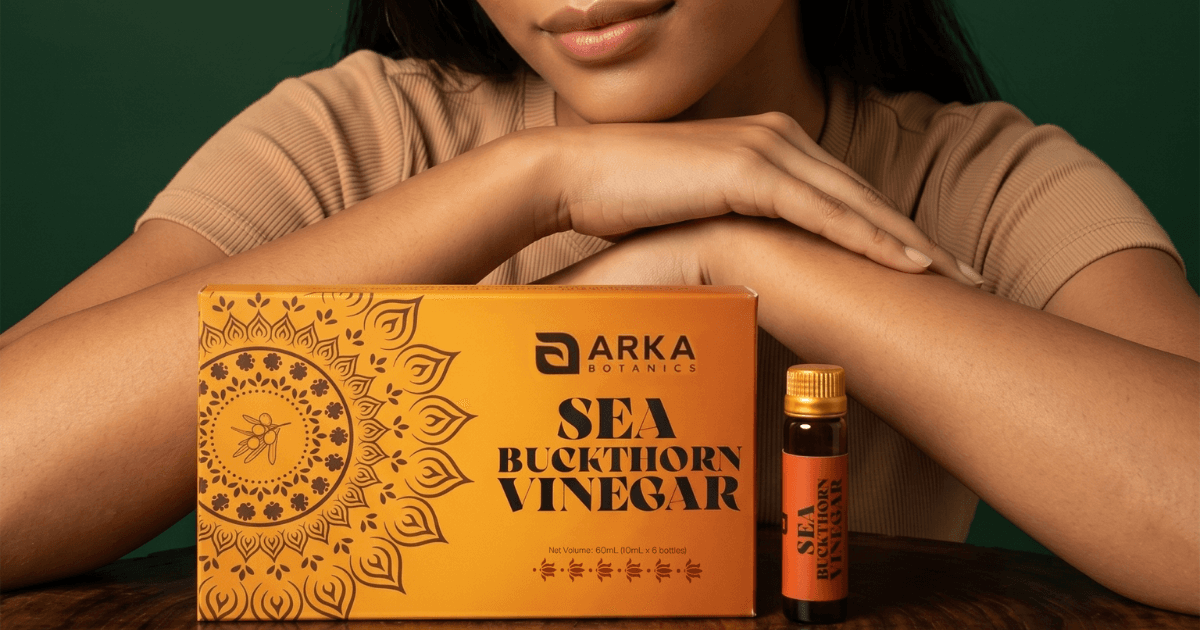
ARKA's Sea Buckthorn Vinegar is formulated to deliver these properties in a consistent, convenient 10 ml daily dose — designed to be diluted and taken as part of a morning or pre-meal ritual.
Traditional Roots: The Heritage Behind the Science
Across the Himalayan belt, sea buckthorn has been part of traditional health practice for more than a thousand years. In Tibetan medicine, it features in preparations associated with physical strength, healing, and respiratory wellness. In the communities we serve, sea buckthorn has long been incorporated into traditional tonics associated with seasonal fortification — consumed more heavily during periods of environmental stress.
Ayurvedic and other regional traditions have long recognised the value of sour, antioxidant-rich fruits as part of seasonal wellness practice, and this pattern of traditional use sits within a broader landscape: traditional medicine remains widely practised and is increasingly being integrated into formal health systems across South-East Asia WHO South-East Asia, Integrating Traditional Medicine in Health Care. Sea buckthorn fits naturally into this tradition — not as an exotic import, but as an ingredient with deep regional roots.
ARKA's approach is to honour that heritage while grounding it in the language and standards of modern nutritional science. The tonic is not sold on mystical properties — it is built on a documented phytochemical profile and a growing, still-developing body of research.
ARKA Sea Buckthorn Vinegar: The Daily Ritual
ARKA's Sea Buckthorn Vinegar is designed for daily use as part of an everyday wellness routine. The recommended ritual:
Timing and Suitability
Morning timing aligns well with a nutrient-support goal: mornings are when many people establish daily wellness habits, and consistency is the variable that matters most for functional food benefits. That said, any consistent daily timing works — a specific hour is far less important than showing up for it every day.
Where stated on the label, ARKA's Sea Buckthorn Vinegar may be suitable for halal and vegetarian lifestyles; check the label for the product version available in your region. It is intended for adults aged 18 and over.
- Take 10 ml of Sea Buckthorn Vinegar
- Dilute in 150-200 ml of water — the natural tartness becomes pleasantly bright when diluted
- Drink before a meal, ideally at the same time each day
- Use a straw to minimise contact with tooth enamel; rinse with water after
What Sea Buckthorn Vinegar Is Not
Honest communication about functional foods requires being as clear about limitations as about benefits. ARKA's Sea Buckthorn Vinegar is not a vaccine. It does not prevent colds, flu, or any specific illness, and it is not a substitute for medical care.
The research behind sea buckthorn is genuinely promising, but it is not yet at the level of large-scale randomised controlled trials confirming disease prevention. Results for specific outcomes, such as the common cold, have been mixed across the available research.
What sea buckthorn vinegar offers is more modest, and we think more honest: meaningful nutrient and antioxidant support for the background conditions immune function depends on, delivered through a daily habit that is safe, convenient, and grounded in both tradition and emerging science.
Frequently Asked Questions
What are the main benefits of sea buckthorn vinegar?
Sea buckthorn vinegar is a fermented functional food tonic made from one of the most antioxidant-rich berries studied Ma et al., Food Chemistry 2020. Some studies suggest it may support everyday immune function through its high concentrations of vitamin C, flavonoids, and other polyphenolic antioxidants. It also carries the general studied properties of fermented vinegar tonics, including potential gut-microbiome support. It is a functional food, not a medicine, and is not intended to prevent, treat, or cure any disease.
How much vitamin C does sea buckthorn contain?
Sea buckthorn berries are among the highest vitamin C-containing fruits studied, with concentrations ranging from roughly 400 to 1500 mg per 100 g depending on variety and growing conditions — significantly more than citrus fruit Kallio et al., Journal of Agricultural and Food Chemistry. The exact vitamin C content in a finished tonic will vary by formulation and serving size.
Can sea buckthorn vinegar help prevent illness?
No. Sea buckthorn vinegar is not intended to prevent illness and is not a substitute for medical care or vaccination. Some studies suggest its antioxidant compounds may support the background conditions of healthy immune function — reducing oxidative stress and supporting anti-inflammatory pathways — but results for specific conditions such as the common cold have been mixed in research. The appropriate framing is support for everyday nutrient and antioxidant status, not disease prevention.
When should I take sea buckthorn vinegar?
The recommended daily serving is 10 ml diluted in 150-200 ml of water, taken before a meal. Morning timing suits a daily-habit goal well, since it anchors a consistent routine at the start of the day, but consistency over time matters more than the precise hour.
Does sea buckthorn vinegar taste good?
Sea buckthorn is naturally tart and bright, with a distinctive sour-sweet flavour. When diluted in water as directed, many people find the resulting drink pleasantly refreshing, and the vinegar fermentation adds some depth to the base flavour. If you find it too sharp, dilute further or add a small amount of honey to taste.
Is sea buckthorn vinegar safe to take daily?
For healthy adults, yes — when taken as directed (diluted, with the simple protective habits described in our safety guide). General vinegar precautions apply: dilute before drinking, use a straw to protect tooth enamel, and rinse with water after. People taking blood-sugar medication or diuretics should consult a doctor before use. See: Are Vinegar Tonics Safe? Side Effects and Who Should Be Cautious.
References
- 1. Ma X, et al. "Impact of phenolic compounds and vitamins C and E on antioxidant activity of sea buckthorn (Hippophaë rhamnoides L.) berries and leaves." Food Chemistry, 2020. https://www.sciencedirect.com/science/article/abs/pii/S0308814619319156
- 2. Kallio H, et al. "Vitamin C, tocopherols and tocotrienols in sea buckthorn (Hippophaë rhamnoides) berries." Journal of Agricultural and Food Chemistry, 2002. https://pubs.acs.org/doi/10.1021/jf020421v
- 3. "Sea buckthorn bioactive metabolites and their pharmacological potential in digestive diseases." Frontiers in Pharmacology, 2025. https://www.frontiersin.org/journals/pharmacology/articles/10.3389/fphar.2025.1637676/full
- 4. Petsiou EI, Mitrou PI, Raptis SA, Dimitriadis GD. "Effect and mechanisms of action of vinegar on glucose metabolism, lipid profile, and body weight." Nutrition Reviews, 2014;72(10):651-661. https://pubmed.ncbi.nlm.nih.gov/25168916/
- 5. World Health Organization (South-East Asia). "Integrating Traditional Medicine in Health Care." 2023. https://www.who.int/southeastasia/news/feature-stories/detail/integrating-traditional-medicine