Many cultures have kept vinegar close at hand for centuries — not just in the kitchen, but as a daily wellness ritual. Today, a category called functional vinegar tonics is bringing that ancestral practice back into focus, supported by a growing body of peer-reviewed research into acetic acid and fermentation science. This guide explains what medicinal vinegars actually are, how they are made, what the science currently says about the acetic acid at their core, and how a daily tonic fits into a modern wellness routine — without overstating what the research shows.
- Medicinal vinegars are vinegar-based preparations fermented or infused with functional botanical ingredients.
- The active molecule behind most researched benefits is acetic acid, produced during a second stage of fermentation; human trials link it to steadier post-meal blood sugar responses Johnston et al., Diabetes Care 2004.
- Unlike culinary vinegars, functional vinegar tonics are formulated for a specific daily-wellness purpose — sleep support, immunity, or digestive balance.
- Traditional practices across Ayurveda, Jamu, and other heritage systems align with what modern fermentation science is now beginning to quantify.
- A standard serving is approximately 10 ml, diluted in water and taken before a meal.
- ARKA Botanics vinegar tonics are functional food tonics, not medicines, and are not intended to diagnose, treat, cure, or prevent any disease.
What Is a Medicinal Vinegar?
A medicinal vinegar is a liquid preparation in which the base vinegar — produced through two-stage fermentation — serves as both a carrier and an active agent for botanical compounds. The term spans a wide spectrum, from simple apple cider vinegars to complex fermented blends incorporating fruit, root, herb, or flower extracts.
The word "medicinal" in common use refers to this intentional, wellness-focused design — it does not imply that these products diagnose, treat, or cure any disease.
The distinction that matters is intent and formulation. Culinary vinegar is optimised for flavour and food preservation; a functional vinegar tonic is formulated to deliver a targeted wellness effect through:
- A fermented base rich in acetic acid and organic acids
- Botanicals selected for their traditional use and/or studied bioactivity
- A controlled serving size (typically around 10 ml) taken as a daily ritual, not a condiment
A Brief History: Vinegar as a Wellness Tradition
Vinegar's role in human health is documented across multiple independent civilisations. Egyptian papyri reference vinegar preparations. Greek physicians used oxymel — a blend of honey and vinegar — for respiratory discomfort. Ayurvedic texts describe fermented preparations known as arishtas, while traditional Jamu formulations from island communities across Southeast Asia frequently incorporated vinegar-fermented botanicals for digestive and restorative support.
This cross-cultural convergence is notable. When independent traditions separated by thousands of miles reach similar conclusions about the same substance, it suggests a functional basis worth investigating — and modern research into acetic acid and fermentation chemistry has begun to do exactly that.
How Functional Vinegar Tonics Are Made
Understanding fermentation helps explain why these products behave differently from a bottle of standard vinegar.
Stage One: Alcoholic Fermentation
Yeast converts the natural sugars in the botanical source material — fruit pulp, honey, or plant extracts — into ethanol. This stage shapes much of the tonic's flavour complexity and initial bioactive profile.
Stage Two: Acetic Acid Fermentation
Acetobacter bacteria convert that ethanol into acetic acid. This step produces the characteristic sharpness of vinegar and, crucially, generates the organic acids, polyphenols, and bioavailable compounds studied in the research below.
The Role of the Botanical
Depending on the formula, the botanical ingredient may ferment alongside the base substrate from the beginning, or be infused after fermentation. Fermenting alongside the base can alter polyphenol profiles and bioavailability; post-fermentation infusion preserves more volatile aromatic compounds.
At ARKA Botanics, each tonic is produced using a process designed to honour both the botanical source and the science of fermentation — resulting in a preparation that carries the character of the ingredient alongside the functional credentials of a properly fermented product.
What the Science Says About Acetic Acid
Acetic acid — the principal organic acid in all vinegars — has attracted substantial research interest over the past two decades, particularly around its role in post-meal glucose response. In a widely cited 2004 human trial, 20 ml of vinegar taken with a high-carbohydrate meal improved whole-body insulin sensitivity by roughly 34% in participants with insulin resistance or type 2 diabetes, and reduced the post-meal rise in blood glucose and insulin Johnston et al., Diabetes Care 2004. A 2017 systematic review and meta-analysis of multiple clinical trials confirmed that vinegar consumption can measurably attenuate post-meal glucose and insulin responses across study populations Shishehbor et al., Diabetes Research and Clinical Practice 2017.
- Blood glucose modulation: A 2014 mechanistic review proposes that acetic acid may slow the activity of alpha-amylase, the enzyme that breaks down starch, and may delay gastric emptying — both of which could support a steadier post-meal glucose curve Petsiou et al., Nutrition Reviews 2014.
- Appetite and satiety: Acetic acid is a short-chain fatty acid, and a human feeding study found that vinegar consumption was associated with changes in appetite and food intake, though tolerability varied between individuals Darzi et al., International Journal of Obesity 2014.
- Digestive support: The same mechanistic research links acetic acid to effects on stomach acid activity and gut microbial balance, both relevant to digestive comfort Petsiou et al., Nutrition Reviews 2014.
- Antimicrobial activity: Vinegar's long history as a food preservative reflects acetic acid's inhibitory effects against a range of common microorganisms in laboratory settings — a well-established property of the molecule itself, not a therapeutic claim about the finished tonic.
- Antioxidant activity: Functional vinegars fermented with polyphenol-rich botanicals such as sea buckthorn can retain measurable antioxidant capacity after fermentation, reflecting the underlying berry's naturally high vitamin C and E content Ma et al., Food Chemistry 2020.
What the Science Does Not Yet Say
It is important to note that most of the human trials behind these findings use relatively small sample sizes, and results should not be extrapolated into therapeutic claims. What the literature does support is that acetic acid is a bioactive compound with plausible, studied mechanisms of action — a meaningful starting point, not a substitute for medical treatment.
Types of Functional Vinegar Tonics
The functional vinegar category is far broader than apple cider vinegar alone. Below are the main typologies.
Fruit-Fermented Vinegar Tonics
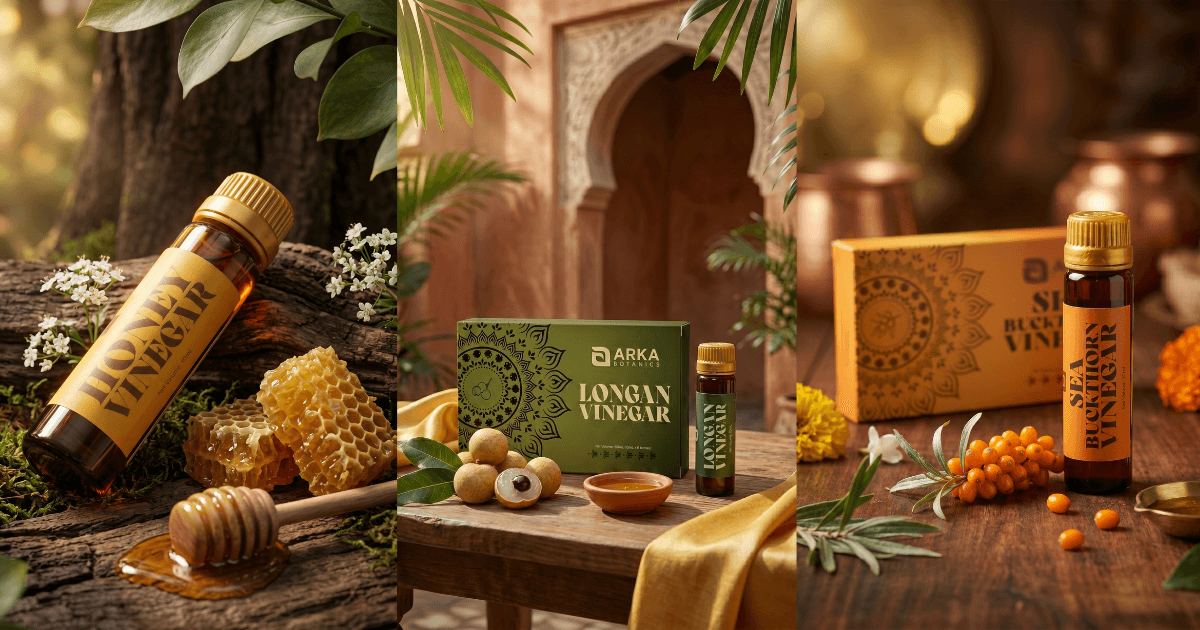
Made by fermenting whole fruit alongside the base substrate. Examples include grape, plum, pineapple, longan, and berry-based vinegars, which tend to carry higher polyphenol loads and more distinct aromatic profiles.
ARKA Botanics Longan Vinegar belongs to this category. Longan carries a long tradition of use for calming the mind and supporting restful sleep; a small 2023 human pilot study began exploring the mechanisms behind that traditional use, though the evidence remains preliminary and examined longan syrup rather than fermented vinegar Ramathibodi Medical Journal 2023. Read more in Longan Vinegar: A Tonic for Sleep, Calm, and a Steadier Mind.
Botanical-Infused Vinegar Tonics
Made by infusing herbs, roots, or botanical extracts into a vinegar base. Traditional fire cider and oxymel preparations fall into this category, where the botanical drives the functional positioning.
Multi-Botanical Fermented Tonics
The most complex category, in which multiple ingredients ferment together to produce a compound bioactive matrix; these require the most formulation expertise.
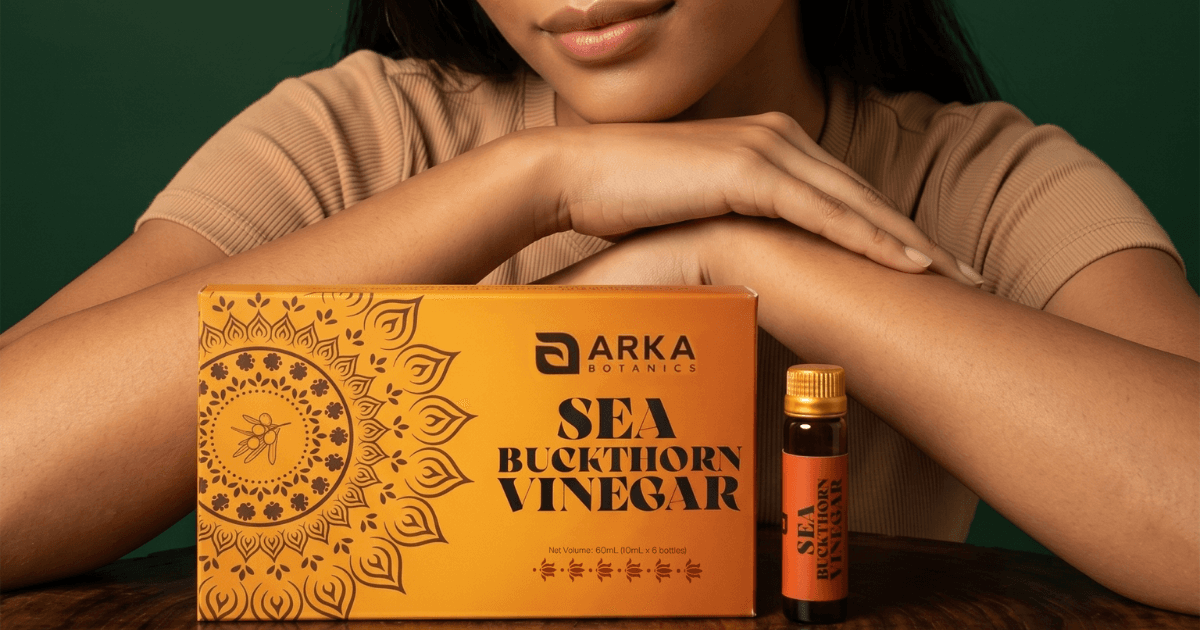
ARKA Botanics Sea Buckthorn Vinegar draws on the nutrient density of sea buckthorn — one of the most studied berries in functional food science for its vitamin C, vitamin E, and phenolic content — to produce an everyday antioxidant tonic. Read more in Sea Buckthorn Vinegar: The Antioxidant Tonic for Everyday Immunity.
Honey-Based Vinegar Tonics
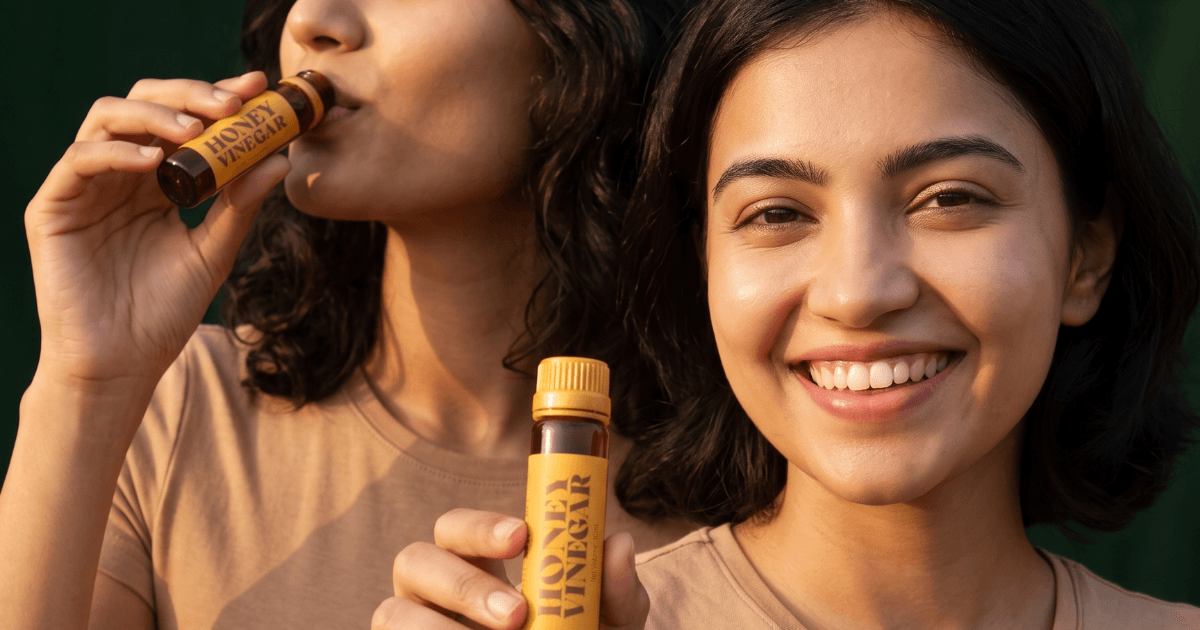
Honey vinegars are produced by fermenting raw honey, creating a liquid rich in organic acids, enzymes, and prebiotic compounds. The resulting tonic has a gentler acidity and is traditionally associated with digestive and gut-lining support.
ARKA Botanics Honey Vinegar is formulated for this purpose — a daily tonic taken before a meal to support digestive comfort and gut balance. Read more in Honey Vinegar for Digestion and Gut Health.
Medicinal Vinegar vs. Apple Cider Vinegar
Apple cider vinegar is the most widely recognised vinegar tonic in Western markets, and it serves as a useful reference point. However, it represents one specific type within a much broader category.
The key differentiators for functional vinegar tonics are:
- Botanical source diversity: ACV is derived from apples. Functional tonics may use longan, sea buckthorn, honey, plum, or complex botanical blends, each with a different bioactive profile.
- Formulation precision: Premium functional tonics are produced to a consistent acetic acid concentration and serving specification; commodity ACV varies significantly by batch and brand.
- Purpose specificity: Functional tonics are designed around a named wellness outcome — sleep, immunity, digestion — rather than general use.
How to Take a Functional Vinegar Tonic Safely
Functional vinegar tonics are concentrated products and should be used as directed. General guidance applies across the category:
- Dilute always: Add the serving (approximately 10 ml for ARKA tonics) to a glass of water. Do not consume undiluted.
- Take before meals: Most of the human studies on vinegar and glucose response involve pre-meal consumption, and traditional practice across multiple heritage systems favours this timing.
- Use consistently: The bioactive compounds in fermented tonics are most likely to be noticed when consumed as part of a consistent daily routine.
- Protect your teeth: Swill plain water after consuming. If your teeth are sensitive, use a straw.
- Start slow: If you are new to vinegar tonics, begin with a smaller amount diluted in more water and allow one to two weeks for your digestive system to adjust.
Frequently Asked Questions
What is the difference between medicinal vinegar and regular vinegar?
Regular culinary vinegar is produced and sold primarily for food preparation — pickling, dressing, and flavouring. Medicinal or functional vinegar is formulated to deliver a targeted daily-wellness benefit through the combination of acetic acid, organic acids, and botanical compounds, taken in a specific serving size as part of a daily ritual.
Are functional vinegar tonics safe to drink every day?
For most healthy adults, a diluted serving of a functional vinegar tonic taken before a meal is considered safe as part of a balanced diet. Those who are pregnant, nursing, taking medication, or managing a health condition should consult a healthcare professional before use. Individual results may vary.
How is a vinegar tonic different from a vinegar supplement capsule?
Liquid vinegar tonics deliver acetic acid and bioactive compounds in a form that begins interacting with digestive enzymes and stomach acid from the first moment of consumption. Some researchers suggest the liquid form may have practical advantages for pre-meal gastric priming, though direct comparisons with encapsulated forms remain limited in the literature.
Which vinegar tonic is best for digestion?
Honey vinegar tonics are traditionally associated with digestive comfort and gut-lining support, owing to the enzymatic and prebiotic properties of fermented honey. ARKA Botanics Honey Vinegar is formulated specifically for this purpose.
Can vinegar tonics help with sleep?
Longan-based vinegar tonics carry a traditional heritage of use for calming the mind and supporting restful sleep. A small 2023 human pilot study explored longan syrup's effect on sleep quality among people experiencing insomnia and reported encouraging early signals, though it involved a limited number of participants and examined longan syrup rather than fermented vinegar — a preliminary finding, not proof Ramathibodi Medical Journal 2023. ARKA Botanics Longan Vinegar is designed for this daily-evening use case, grounded in that traditional use.
Are ARKA Botanics vinegar tonics halal and vegetarian?
Where stated on the label, ARKA Botanics products are suitable for halal and vegetarian diets. Please refer to individual product labels for confirmation.
References
- 1. Johnston CS, Kim CM, Buller AJ. "Vinegar Improves Insulin Sensitivity to a High-Carbohydrate Meal in Subjects With Insulin Resistance or Type 2 Diabetes." Diabetes Care, 2004;27(1):281-282. https://diabetesjournals.org/care/article/27/1/281/26582/Vinegar-Improves-Insulin-Sensitivity-to-a-High
- 2. Petsiou EI, Mitrou PI, Raptis SA, Dimitriadis GD. "Effect and mechanisms of action of vinegar on glucose metabolism, lipid profile, and body weight." Nutrition Reviews, 2014;72(10):651-661. https://pubmed.ncbi.nlm.nih.gov/25168916/
- 3. Shishehbor F, Mansoori A, Shirani F. "Vinegar consumption can attenuate postprandial glucose and insulin responses; a systematic review and meta-analysis of clinical trials." Diabetes Research and Clinical Practice, 2017;127:1-9. https://www.sciencedirect.com/science/article/abs/pii/S0168822716308518
- 4. Darzi J, Frost GS, Montaser R, Yap J, Robertson MD. "Influence of the tolerability of vinegar as an oral source of short-chain fatty acids on appetite control and food intake." International Journal of Obesity, 2014;38(5):675-681. https://www.nature.com/articles/ijo2013157
- 5. Ma X, et al. "Impact of phenolic compounds and vitamins C and E on antioxidant activity of sea buckthorn (Hippophaë rhamnoides L.) berries and leaves." Food Chemistry, 2020. https://www.sciencedirect.com/science/article/abs/pii/S0308814619319156
- 6. "Effectiveness of Longan Syrup on Improving Sleep Quality Among Insomnia Volunteers." Ramathibodi Medical Journal, 2023. https://he02.tci-thaijo.org/index.php/ramajournal/article/view/261723