
You have chosen a functional vinegar tonic. Now comes the practical question: how exactly do you take it? The answer matters more than it might seem. Dosage, dilution, and timing all influence how your body interacts with the bioactive compounds in fermented vinegar. This guide gives you precise, practical guidance — grounded in what the research suggests and in what traditional daily-use practice looks like across ancestral wellness systems, from Ayurveda to Jamu to Traditional Chinese Medicine.
- The standard serving for ARKA Botanics tonics is approximately 10 ml, diluted in a full glass (200-250 ml) of water.
- Never consume vinegar tonic undiluted — always add it to water before drinking.
- Timing should match your wellness goal: before meals for digestion, morning for immunity, evening for sleep and calm.
- Taking vinegar before a carbohydrate-containing meal is the timing most consistent with the available human research on post-meal glucose response Johnston et al., Diabetes Care 2004.
- Consistency over weeks matters more than precision about the exact time of day.
- Start with a smaller amount if you are new to vinegar tonics, and build up gradually.
- These are functional food products for adult use (18+). Consult a healthcare professional if you have a health condition or take medication.
The Non-Negotiable First Rule: Always Dilute
Before anything else: vinegar tonic should never be consumed undiluted. This is not a precaution for the overly cautious — it is a practical requirement for safe, comfortable use.
Acetic acid, even at the modest concentrations found in functional vinegar tonics, is acidic enough to irritate tooth enamel, the oesophageal lining, and the stomach if taken straight. Diluting it in a full glass of water brings the acid concentration down to a level that is well tolerated for daily use. This is standard, sensible practice for any vinegar-based tonic, not a claim unique to ARKA Botanics.
- Pour first: Add your tonic to the glass before the water, so it disperses fully.
- Use a full glass: 200 to 250 ml of water is the right volume for a 10 ml tonic serving.
- Temperature: Room temperature or warm water works well. Avoid very hot water, which may degrade some heat-sensitive compounds.
- After drinking: Rinse your mouth with plain water to clear residual acidity from your teeth. Wait about 30 minutes before brushing.
- If sensitive: Drink through a straw to minimise contact between the diluted tonic and your tooth enamel.
The Standard Dose: How Much to Take
ARKA Botanics Recommended Serving
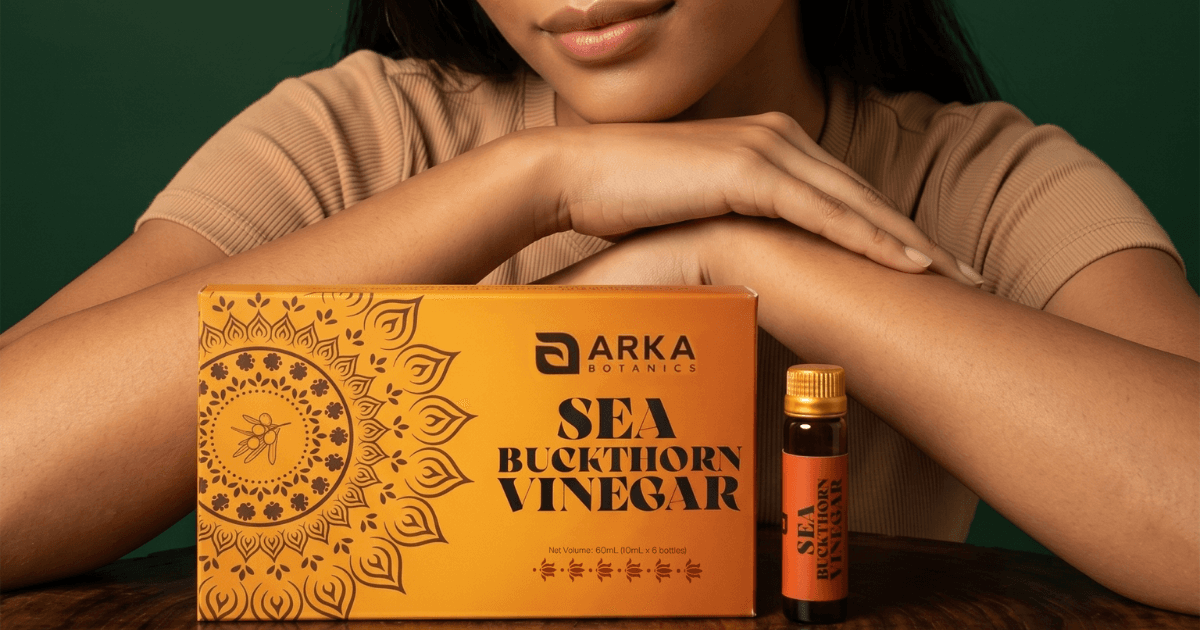
The recommended serving for all three ARKA Botanics Nirmal tonics — Honey Vinegar, Sea Buckthorn Vinegar, and Longan Vinegar — is approximately 10 ml per day, roughly two teaspoons. This falls within the range used in published human vinegar research, where daily intakes of diluted vinegar have most often been studied at doses of around 15-30 ml (equivalent to roughly 10-20 g of acetic acid) Petsiou et al., Nutrition Reviews 2014, and is consistent with traditional daily-use practice across heritage wellness systems.
This is a once-daily ritual per tonic, not a dose to be repeated multiple times throughout the day.
Starting Out: Building Gradually
If this is your first time using a functional vinegar tonic, beginning with a smaller volume — approximately 5 ml in a full glass of water — for the first one to two weeks is advisable. Some people experience mild digestive adjustment when introducing fermented acetic acid products; a gradual start gives your system time to adapt.
Once comfortable at 5 ml, increase to the full 10 ml serving. Most people find the transition smooth within the first fortnight.
More Is Not Better
Increasing your serving beyond the recommended amount does not proportionally increase benefit, and may raise the risk of digestive discomfort or enamel sensitivity. Stick to the recommended serving and let consistency — not quantity — do the work.
When to Drink It: Timing by Wellness Goal
The right timing for your vinegar tonic depends on why you are taking it. Different wellness goals align with different moments in the day, and traditional use across ancestral systems reflects this — these were not random habits but practices refined over generations of daily use.
For Digestive Support: Before Your Main Meal
Consuming your vinegar tonic 10 to 15 minutes before your largest meal is the timing most consistent with both the studied mechanisms and traditional pre-meal tonic practices in Ayurvedic and Jamu traditions WHO South-East Asia, Integrating Traditional Medicine in Health Care. Research on vinegar's mechanisms points to delayed gastric emptying and reduced starch-digesting enzyme activity as plausible contributors to its effect on the digestive environment after a meal Petsiou et al., Nutrition Reviews 2014.
This timing also aligns with the clinical evidence base for vinegar and post-meal glucose response: a widely cited human trial found that 20 g of vinegar taken before a high-carbohydrate meal improved whole-body insulin sensitivity by roughly 34% in people with insulin resistance or type 2 diabetes, and reduced the post-meal rise in glucose and insulin Johnston et al., Diabetes Care 2004. This is supportive, mechanistic evidence for the pre-meal habit — it does not mean a vinegar tonic treats or manages diabetes, and it is not a substitute for medical care.
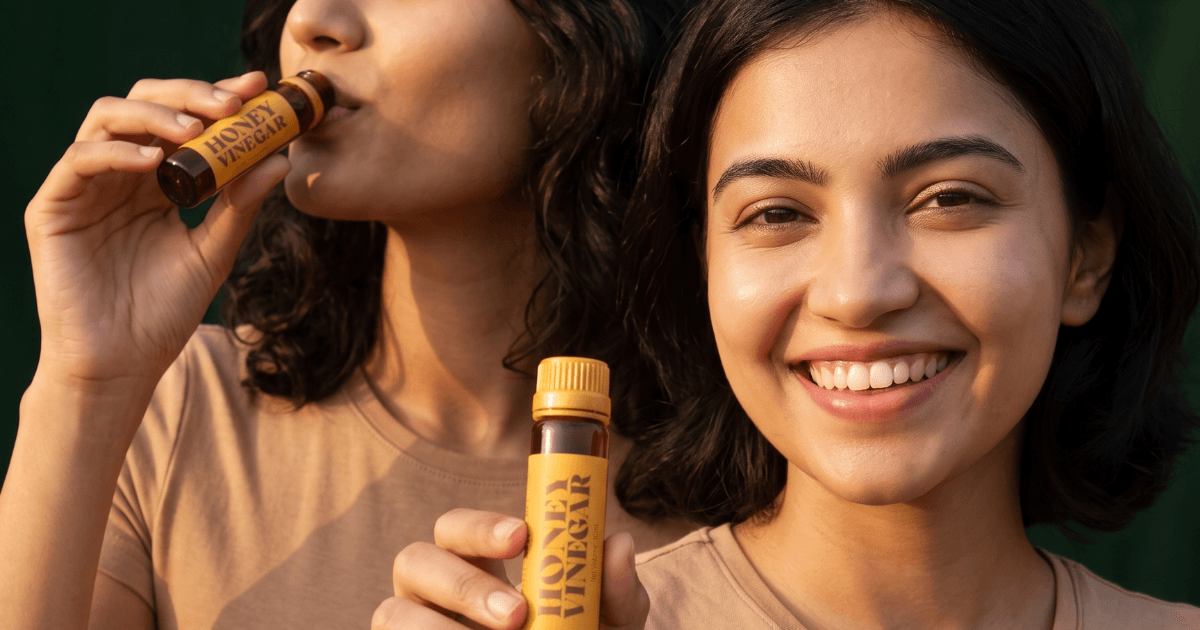
Honey Vinegar: 10-15 minutes before your main meal — 10 ml in 200 ml warm water. Sip slowly rather than drink quickly.
For Everyday Immunity: Morning
Taking your immunity tonic first thing in the morning — before breakfast, or alongside a light morning meal — aligns with the practice of starting the day with a concentrated botanical dose.
Sea buckthorn berries are naturally rich in vitamin C and vitamin E, along with phenolic compounds that contribute to measurable antioxidant activity Ma et al., Food Chemistry 2020 Kallio et al., Journal of Agricultural and Food Chemistry. A morning serving is a practical way to build this antioxidant and vitamin C intake into your day.
Sea Buckthorn Vinegar: Morning, on rising or before breakfast — 10 ml in 200 ml cool or room-temperature water. Pairs well with a glass of plain water beforehand.
For Sleep Support and Calm: Evening
Longan vinegar is an evening tonic. Its traditional use is as a calming, restorative preparation taken as the day winds down — not as a sleep medication, but as a daily act of settling the mind and body ahead of rest.
The human research here is still early. A small pilot study of longan syrup in people with insomnia explored its effect on sleep quality Ramathibodi Medical Journal, Longan Syrup and Sleep Quality, and separate animal research has found neuroprotective and antioxidant activity in longan flower extract Prasansuklab et al., PubMed 2012. Together these are preliminary, emerging findings, not proof of a sleep benefit in humans from longan vinegar specifically — we frame Longan Vinegar's evening use as traditional practice supported by early-stage research, not a clinically established sleep aid.
Longan Vinegar: 30-60 minutes before sleep — 10 ml in 200 ml warm water. Consume as part of a deliberate slowing-down: no screens, reduced light, a quiet setting.
Building a Daily Ritual That Sticks
The difference between occasional use and genuine benefit is consistency. Heritage wellness systems understood this deeply — these preparations were daily rituals, embedded in the rhythm of life, not products taken on and off like a supplement you remember only sometimes.
Research on habit formation supports the same conclusion: attaching a new behaviour to an existing anchor is one of the most reliable ways to make it stick.
Habit Stacking
Preparing in Advance
There is no need to measure precisely each morning. Keep a marked small vessel — a 10 ml shot glass or a marked bottle cap — beside your tonic. Preparation should take no more than 30 seconds.
What Consistency Looks Like in Practice
Aim for six to seven days a week. Missing one day occasionally will not undo your progress — what matters is the pattern over weeks. Most people who report meaningful changes from functional vinegar tonics report them after four to eight consistent weeks, not days.
Combining Tonics: Can You Take More Than One?
Some people take more than one ARKA Botanics tonic — for example, Sea Buckthorn Vinegar in the morning for immunity and Honey Vinegar before their main meal for digestion. This is a reasonable approach, provided a few sensible guardrails are followed.
Combining Longan Vinegar (evening) with either of the daytime tonics is straightforward — they occupy different moments in the day by design.
- Total daily vinegar intake stays moderate — no more than 20 ml of combined tonic per day.
- Each tonic is properly diluted in its own full glass of water.
- You have introduced each tonic separately before combining them, so you can assess your individual tolerance.
What to Expect in the First Few Weeks
Setting realistic expectations is part of honest wellness communication. Functional foods are not medicines with predictable dose-response curves, and individual responses vary.
- Week 1-2: Your digestive system adjusts. Some people notice a slight change in digestive patterns or mild warmth in the stomach after taking the tonic. This typically settles.
- Week 2-4: Digestive comfort changes, if they occur, tend to become apparent in this window with consistent pre-meal use.
- Week 4-8: Effects on sleep quality, immune resilience, and energy are longer-burn outcomes that require patience and consistency to notice.
- Throughout: Individual responses vary significantly. Functional foods are not medicines with predictable dose-response curves — a daily tonic is a habit you build into a lifestyle, not a fast-acting intervention.
Frequently Asked Questions
What is the correct dose of medicinal vinegar per day?
For ARKA Botanics Nirmal tonics, the recommended daily serving is approximately 10 ml, diluted in 200-250 ml of water. This falls within the serving range used in published vinegar research Petsiou et al., Nutrition Reviews 2014 and aligns with traditional daily-use practice. Do not exceed this without professional guidance.
Can I drink vinegar tonic on an empty stomach?
Taking vinegar tonic on a completely empty stomach may cause mild digestive discomfort in some people, particularly when first starting. If this happens, take your tonic alongside a small amount of food, or drink a glass of plain water beforehand to prepare the stomach lining.
Is it better to take vinegar before or after a meal?
Before meals is the most studied and most traditionally consistent timing for digestive and post-meal glucose effects. A human clinical study found that vinegar taken before a high-carbohydrate meal improved insulin sensitivity and reduced the post-meal glucose and insulin rise Johnston et al., Diabetes Care 2004, a finding consistent with vinegar's proposed mechanisms of delaying gastric emptying and slowing starch digestion Petsiou et al., Nutrition Reviews 2014. This applies particularly to Honey Vinegar. Sea Buckthorn Vinegar is generally taken in the morning, before or with a light breakfast, rather than before dinner. Post-meal use is less well-studied but not contraindicated.
Can I mix my vinegar tonic into juice or tea?
Yes. Water is the most neutral and recommended dilutant, but you can add your tonic to warm herbal tea, diluted fruit juice, or lukewarm water with a small amount of raw honey if you prefer. Avoid carbonated drinks, which amplify the acidic sensation, and very hot liquids, which may affect heat-sensitive botanical compounds.
What happens if I accidentally take too much?
Consuming more than the recommended serving in one sitting is unlikely to cause serious harm in most healthy adults, but it may cause digestive discomfort, nausea, or a burning sensation in the throat. Drink plenty of plain water. If symptoms persist or are severe, seek medical advice. This is not a product to self-administer in large quantities.
How do I know if the vinegar tonic is working?
Functional foods do not produce the acute, measurable responses of pharmaceutical products. Signs that a daily vinegar tonic may be contributing positively include improved digestive regularity and comfort, a subjective sense of more settled sleep, or a general sense of sustained energy across the day. These changes are typically gradual and may be subtle. Keeping a simple daily note for four to eight weeks is the clearest way to assess your individual response.
Should I take a break from my vinegar tonic periodically?
There is no research basis requiring a break from daily vinegar tonic use in healthy adults. If you choose to pause, there is no 'detox' rebound to worry about — simply resume your routine when ready. Those with specific health conditions should discuss ongoing use with a healthcare professional.
References
- 1. Johnston CS, Kim CM, Buller AJ. "Vinegar Improves Insulin Sensitivity to a High-Carbohydrate Meal in Subjects With Insulin Resistance or Type 2 Diabetes." Diabetes Care, 2004;27(1):281-282. https://diabetesjournals.org/care/article/27/1/281/26582/Vinegar-Improves-Insulin-Sensitivity-to-a-High
- 2. Petsiou EI, Mitrou PI, Raptis SA, Dimitriadis GD. "Effect and mechanisms of action of vinegar on glucose metabolism, lipid profile, and body weight." Nutrition Reviews, 2014;72(10):651-661. https://pubmed.ncbi.nlm.nih.gov/25168916/
- 3. Ma X, et al. "Impact of phenolic compounds and vitamins C and E on antioxidant activity of sea buckthorn (Hippophaë rhamnoides L.) berries and leaves." Food Chemistry, 2020. https://www.sciencedirect.com/science/article/abs/pii/S0308814619319156
- 4. Kallio H, et al. "Vitamin C, tocopherols and tocotrienols in sea buckthorn (Hippophaë rhamnoides) berries." Journal of Agricultural and Food Chemistry, 2002. https://pubs.acs.org/doi/10.1021/jf020421v
- 5. "Effectiveness of Longan Syrup on Improving Sleep Quality Among Insomnia Volunteers." Ramathibodi Medical Journal, 2023. https://he02.tci-thaijo.org/index.php/ramajournal/article/view/261723
- 6. Prasansuklab A, et al. "Neuroprotective Effects of Longan (Dimocarpus longan Lour.) Flower Water Extract on MPP+-Induced Neurotoxicity in Rat Brain." 2012. https://pubmed.ncbi.nlm.nih.gov/22920583/
- 7. World Health Organization (South-East Asia). "Integrating Traditional Medicine in Health Care." 2023. https://www.who.int/southeastasia/news/feature-stories/detail/integrating-traditional-medicine