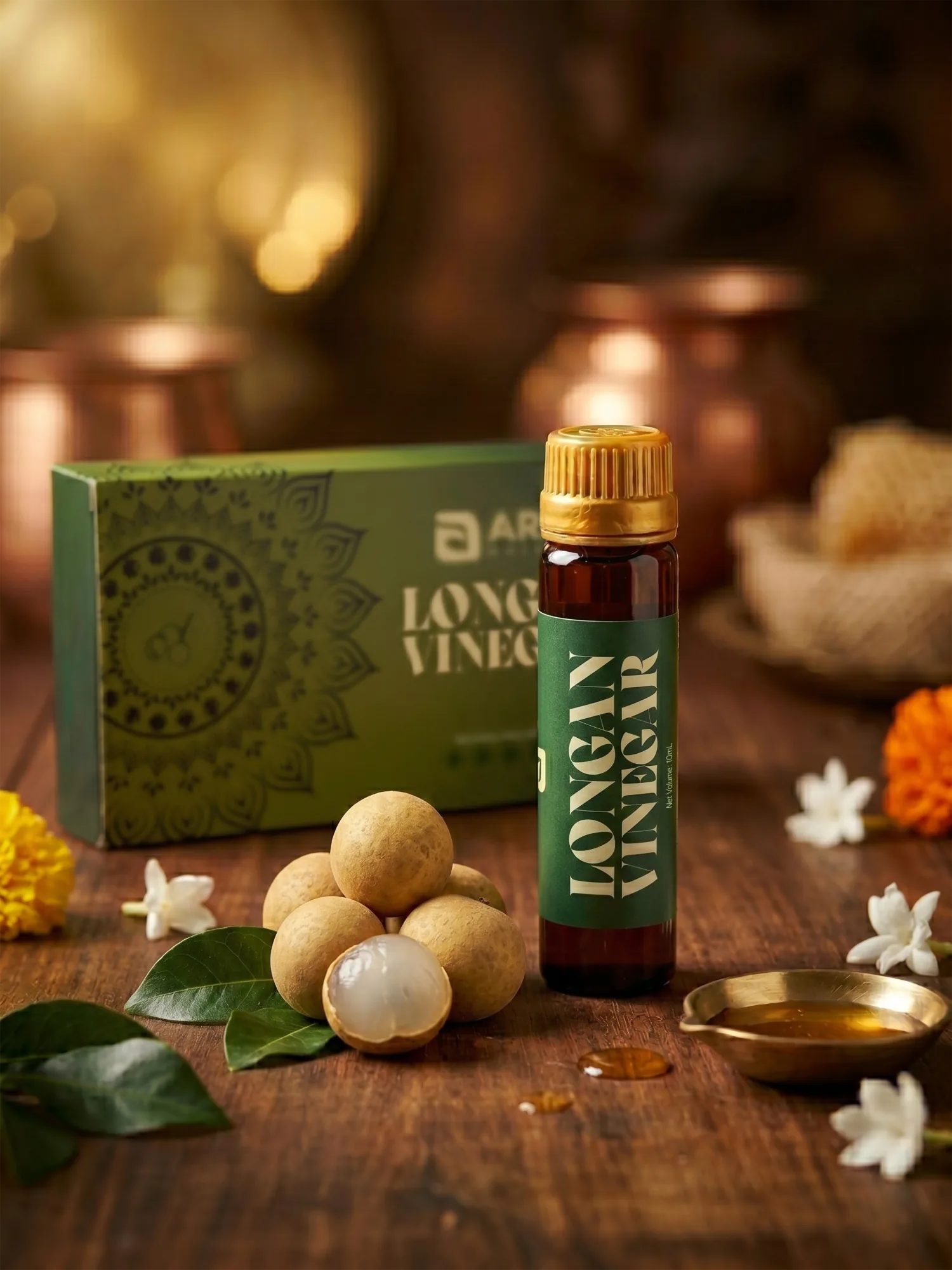
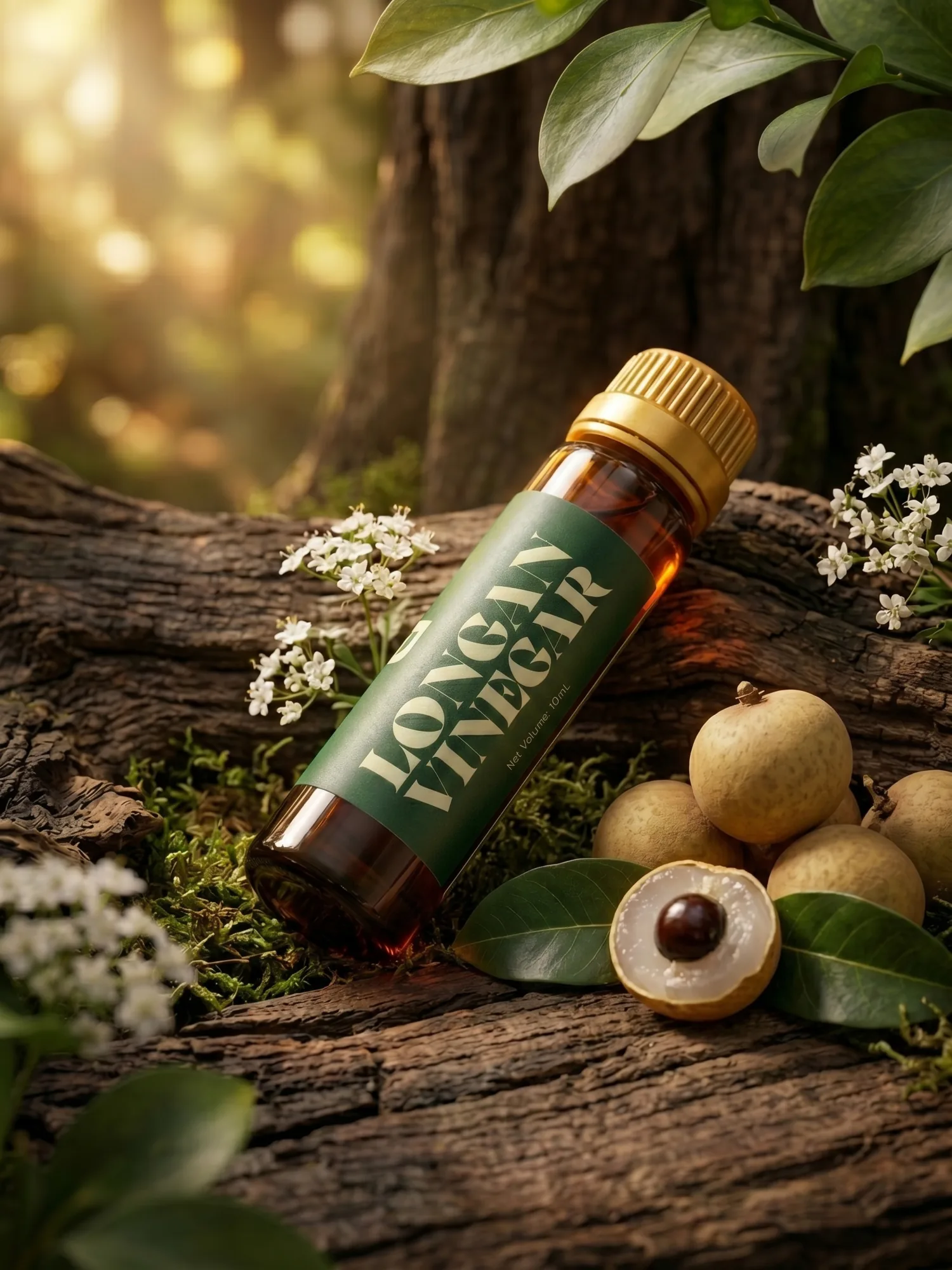
The longan is a small, translucent fruit with a dark seed at its centre — which is how it earned its name, 'dragon eye.' In the herbal traditions of southern China and Southeast Asia, it has long been the fruit you reach for when the mind won't quiet down.
A herb for the heart and mind
Classical TCM describes longan as nourishing to the heart and spleen — the systems traditionally linked to sleep, worry, and mental stamina. Dried longan appears in centuries-old formulas for insomnia and overthinking.
Translated into modern language, that's a botanical traditionally used to calm an overactive nervous system and ease the body toward rest — without sedating it into grogginess.
Why it suits the way we live now
We end our days more stimulated than any generation before us. Blue light, late notifications, and a mind still running yesterday's to-do list all push back against sleep. A calming evening ritual is no longer a luxury — it's a counterweight.
- Traditionally calming — used for restless sleep and a busy mind.
- Steadies blood sugar — fewer overnight dips that wake you.
- Gentle, not sedating — eases you toward rest rather than knocking you out.
Some remedies feel ancient because they are. Longan has been quieting minds since long before the word 'insomnia' existed.
Taken as an evening tonic, longan vinegar is a small cue to your body that the day is closing — a botanical full stop at the end of a sentence.
- Longan is a classic TCM herb for sleep and a restless mind.
- It calms without heavy sedation.
- Best as part of a wind-down ritual in the evening.